Speed Optimization of Model Inference
We have developed a set of technologies for Vision-Language-Action (VLA)-based robotic manipulation, with a particular focus on improving data efficiency, inference robustness, motion execution, and overall task performance. Our approach is built upon the NVIDIA Isaac GR00T N1.6 VLA model and extends it with techniques designed to make better use of limited robotic demonstration data and to improve practical deployment on real robotic systems.
Our VLA technology incorporates data-efficient learning and inference methods, including improved data utilization, trajectory and action representation, temporal consistency, and inference-time optimization. These techniques enable the model to learn task-relevant manipulation behaviors more effectively while maintaining robustness against variations in object shape, pose, and interaction state.
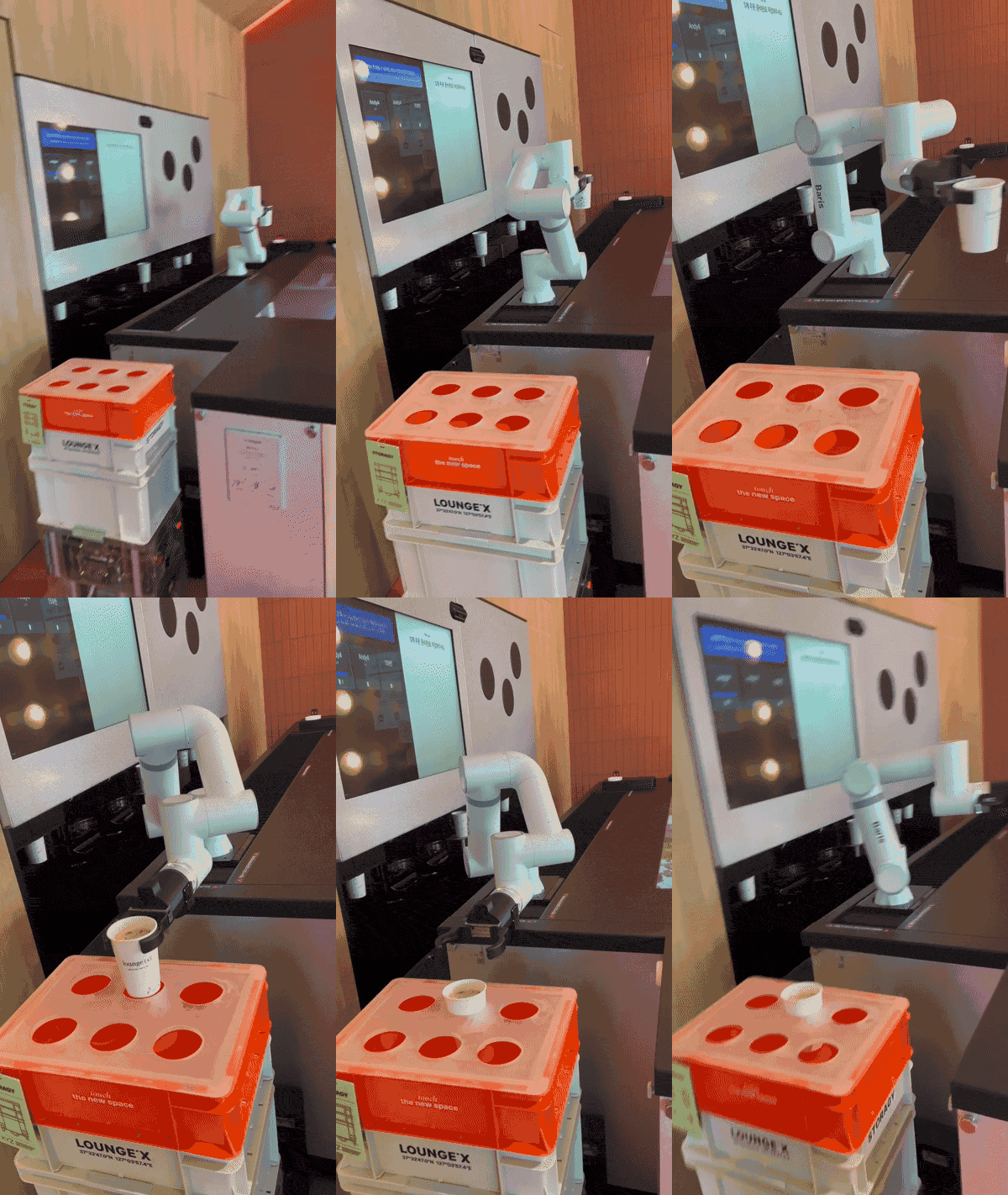
In addition to the learned VLA policy, we combine motion planning, trajectory optimization, and low-level control technologies to improve execution efficiency and stability. This hybrid approach reduces unnecessary robot motion, optimizes manipulation trajectories, coordinates arm and gripper/hand behaviors, and enables more reliable execution than relying solely on end-to-end policy inference.
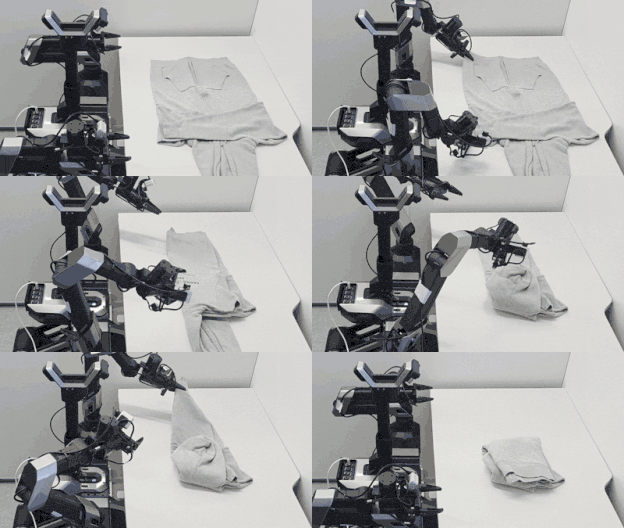
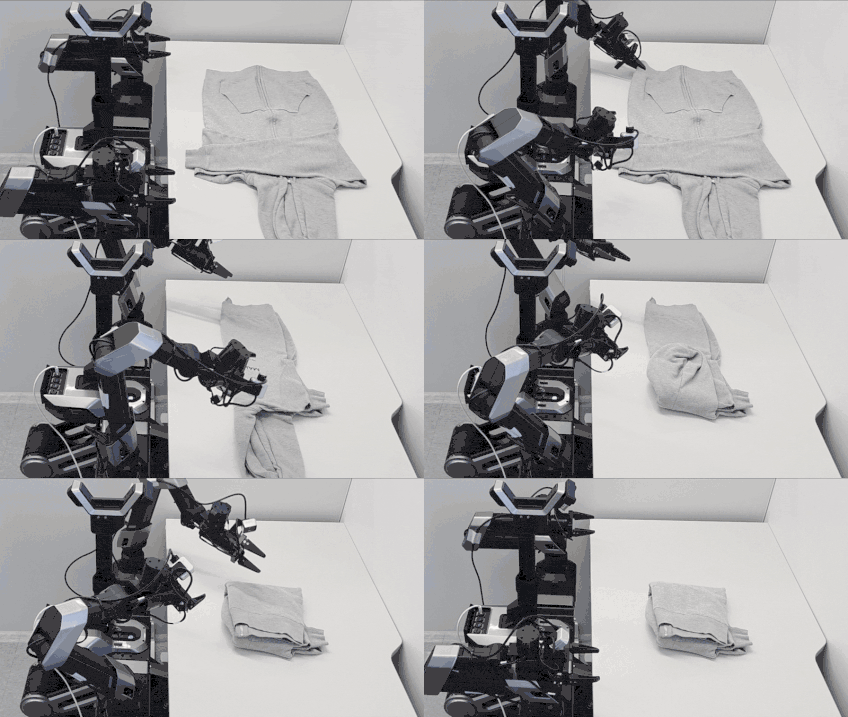
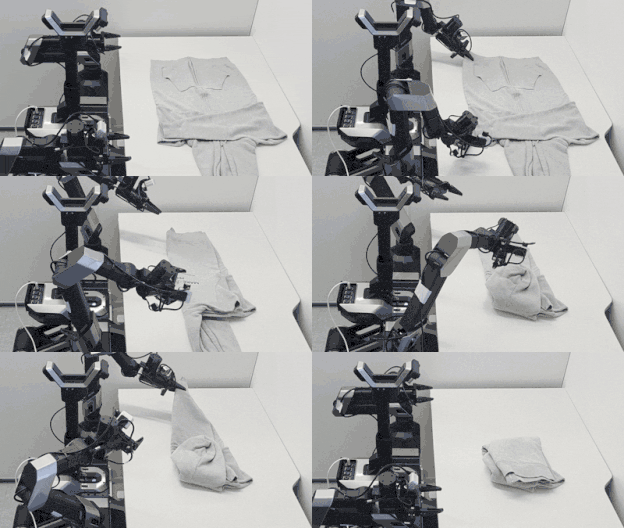
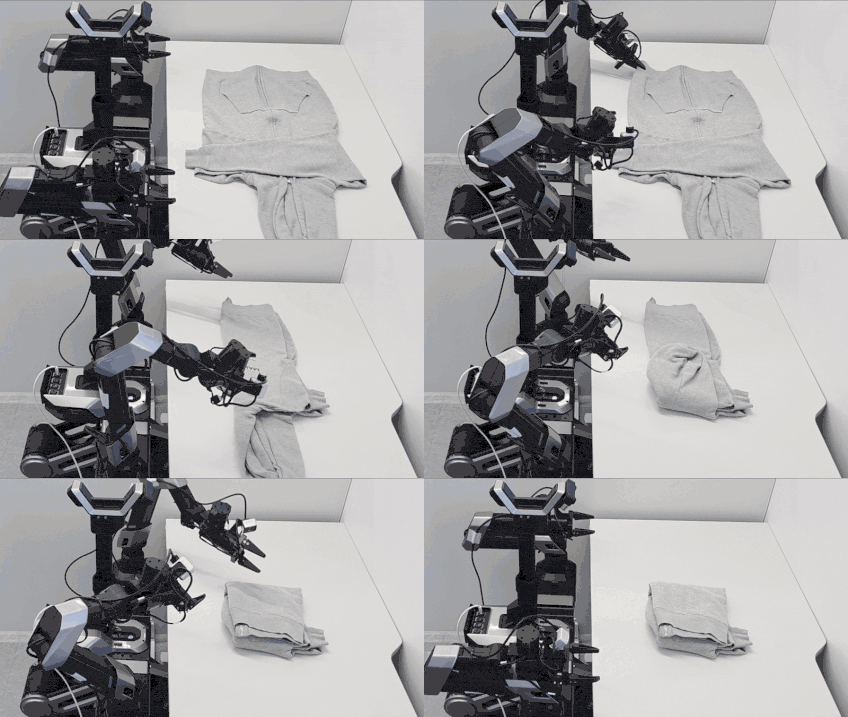
We applied this VLA-based manipulation technology to a robotic garment-folding task, where deformable objects introduce significant challenges in perception, planning, and control. By combining VLA-based intelligence with optimized planning and control, we achieved more than a 50% reduction in overall folding time while maintaining a high success rate and consistent folding quality.
This application demonstrates the potential of our VLA technology stack to improve both the productivity and reliability of complex robotic manipulation tasks, particularly those involving deformable objects and long-horizon interactions.